AI in Regulatory Strategy

AI in Regulatory Strategy

Insight Brief

Insight Brief

AI in Regulatory Strategy

Insight Brief

Banner Image
Banner Image
Banner Image

The Shift: Regulators Are Now Targeting AI Traceability

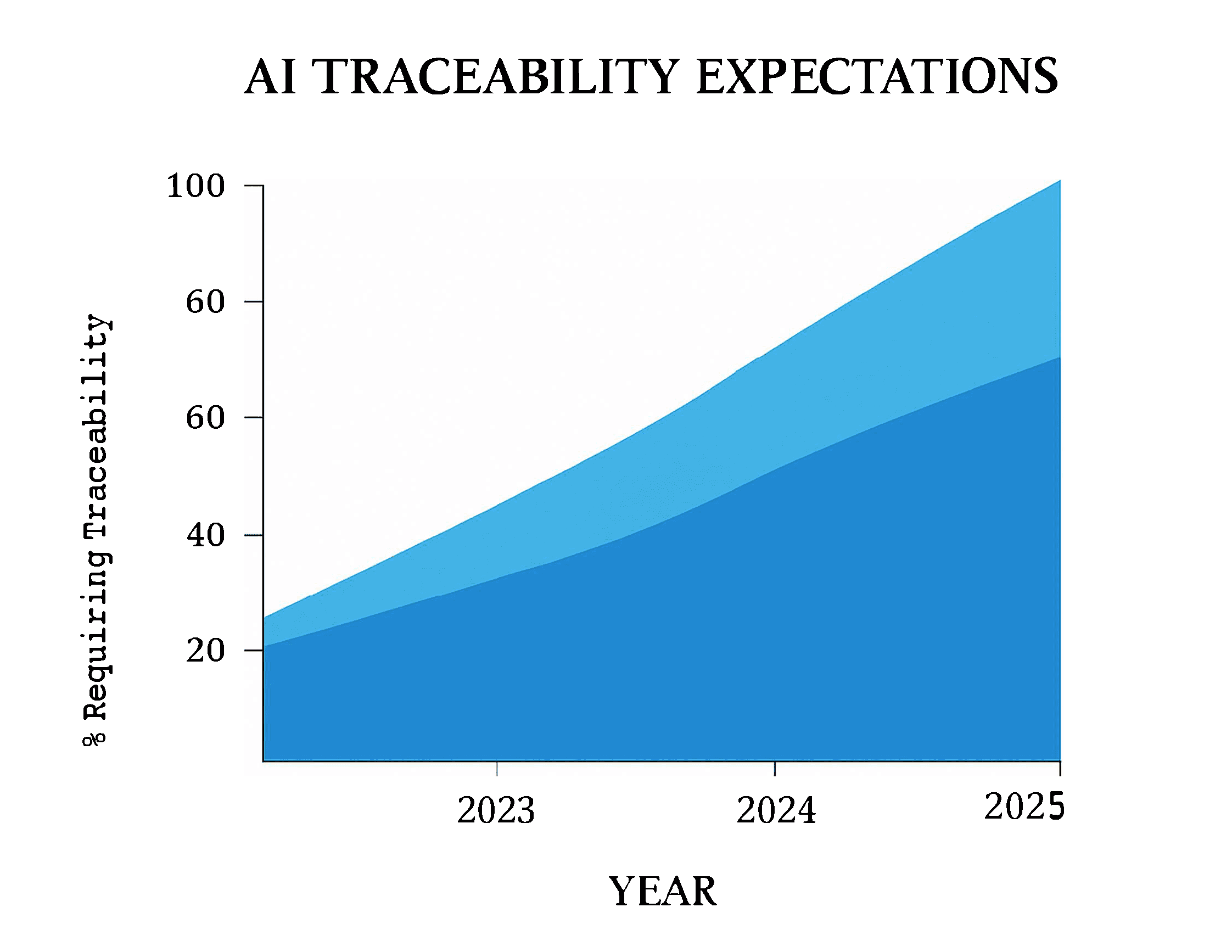
The regulatory landscape has undergone a decisive shift in 2025. Global health authorities, particularly the EMA and FDA, are no longer treating AI as a peripheral tool. Instead, it is being scrutinized as a direct contributor to safety and compliance decisions. This means AI tools must now meet the same standards of transparency, auditability, and traceability as traditional systems used in regulated environments.

What triggered this change is the increasing use of AI in core regulatory processes—such as adverse event classification, signal detection, risk documentation, and labeling updates. As a result, sponsors are expected to demonstrate how an AI model is trained, how outputs are interpreted, and how decisions are validated—across the full lifecycle of tool deployment. It’s not enough to declare an algorithm “validated.” Regulators are now asking, “By whom? Under what conditions? Where is the audit trail?”

The Shift: Regulators Are Now Targeting AI Traceability

The regulatory landscape has undergone a decisive shift in 2025. Global health authorities, particularly the EMA and FDA, are no longer treating AI as a peripheral tool. Instead, it is being scrutinized as a direct contributor to safety and compliance decisions. This means AI tools must now meet the same standards of transparency, auditability, and traceability as traditional systems used in regulated environments.

What triggered this change is the increasing use of AI in core regulatory processes—such as adverse event classification, signal detection, risk documentation, and labeling updates. As a result, sponsors are expected to demonstrate how an AI model is trained, how outputs are interpreted, and how decisions are validated—across the full lifecycle of tool deployment. It’s not enough to declare an algorithm “validated.” Regulators are now asking, “By whom? Under what conditions? Where is the audit trail?”

The Shift: Regulators Are Now Targeting AI Traceability

The regulatory landscape has undergone a decisive shift in 2025. Global health authorities, particularly the EMA and FDA, are no longer treating AI as a peripheral tool. Instead, it is being scrutinized as a direct contributor to safety and compliance decisions. This means AI tools must now meet the same standards of transparency, auditability, and traceability as traditional systems used in regulated environments.

What triggered this change is the increasing use of AI in core regulatory processes—such as adverse event classification, signal detection, risk documentation, and labeling updates. As a result, sponsors are expected to demonstrate how an AI model is trained, how outputs are interpreted, and how decisions are validated—across the full lifecycle of tool deployment. It’s not enough to declare an algorithm “validated.” Regulators are now asking, “By whom? Under what conditions? Where is the audit trail?”

This shift exposes a painful gap: most regulatory teams have not been involved in AI tool development. These tools are often developed by technical or vendor teams, with limited input from the people responsible for regulatory filings. And yet, it is the regulatory team that will be held accountable during inspections and reviews.

Action point: Regulatory leaders must establish internal checkpoints, request traceability plans from vendors, and assert their role in AI risk governance. Documentation, not assumptions, will determine approval outcomes.

AI In Safety Compliance White Paper

The Risk: Invisible Bias, Lack of Audit Trails, Incomplete Data Inputs

AI models are only as good as the data and assumptions they are built upon. In safety compliance, that’s a high-risk reality. Many current AI systems were trained on homogeneous clinical trial data or limited subsets of historical submissions. They fail to generalize to diverse populations or emerging real-world data sources.


Core Features

The Risk: Invisible Bias, Lack of Audit Trails, Incomplete Data Inputs

AI models are only as good as the data and assumptions they are built upon. In safety compliance, that’s a high-risk reality. Many current AI systems were trained on homogeneous clinical trial data or limited subsets of historical submissions. They fail to generalize to diverse populations or emerging real-world data sources.


Core Features

The Risk: Invisible Bias, Lack of Audit Trails, Incomplete Data Inputs

AI models are only as good as the data and assumptions they are built upon. In safety compliance, that’s a high-risk reality. Many current AI systems were trained on homogeneous clinical trial data or limited subsets of historical submissions. They fail to generalize to diverse populations or emerging real-world data sources.


Feature Image
Feature Image
Feature Image

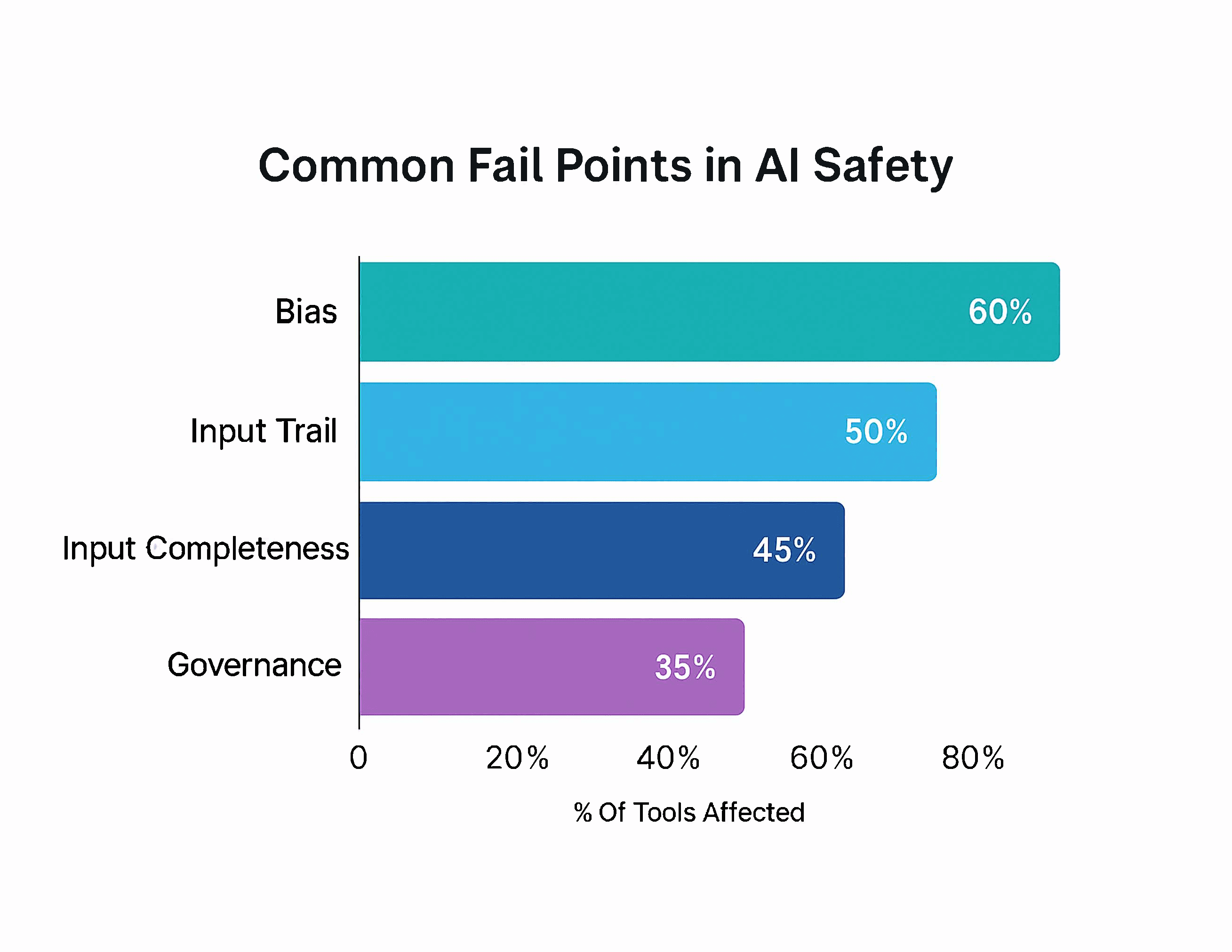
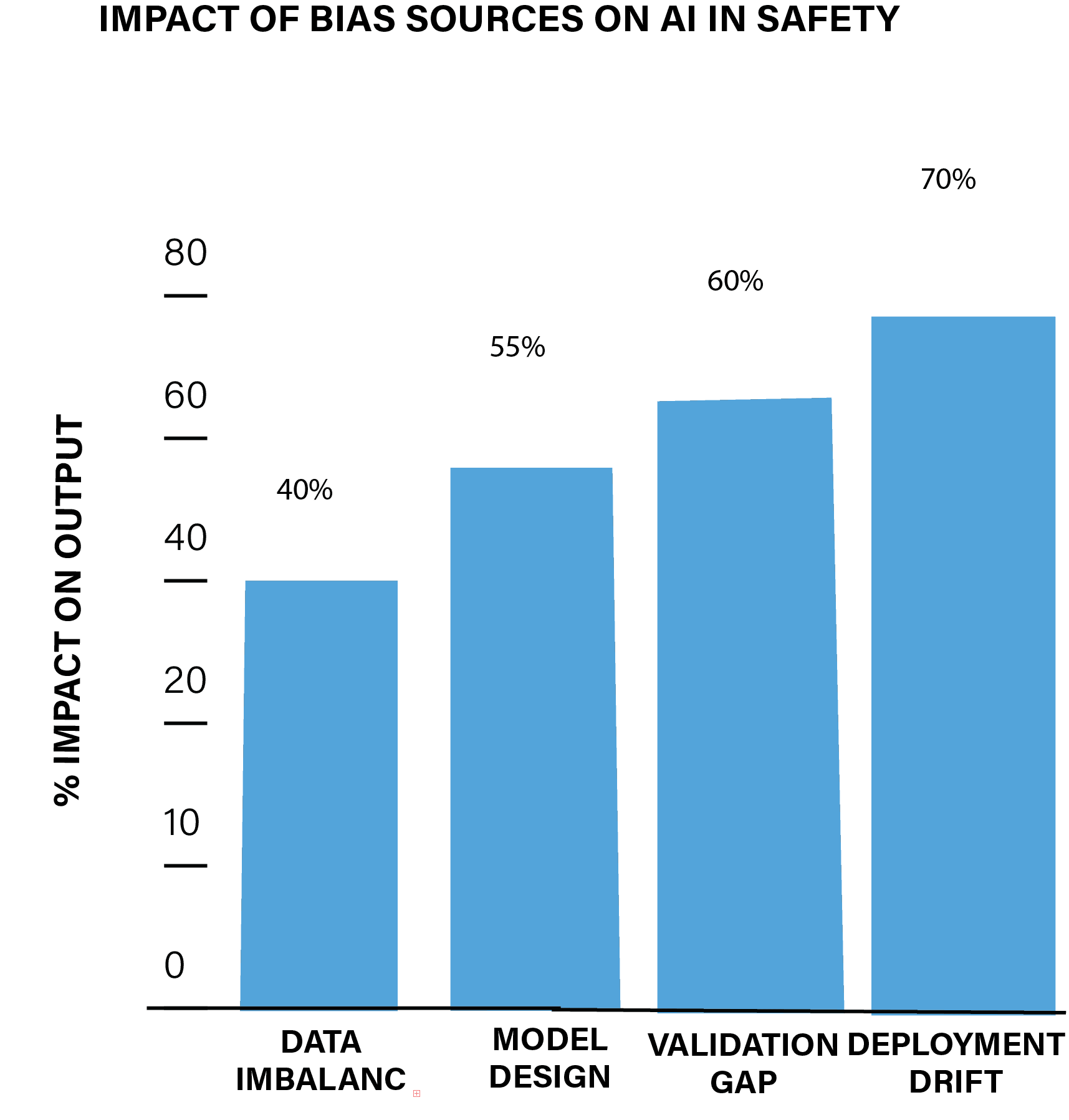
This introduces several systemic risks. First, invisible bias. AI may prioritize outcomes based on overrepresented groups while underreporting rare adverse events. It may also embed regional data disparities—for instance, under-representing pharmacovigilance standards in Asia or Latin America, despite global use.

Second, auditability is often missing. When an AI model generates a risk score or labels an adverse event, regulators want to know: what data fed the model? What logic or algorithmic path did it follow? Where is the version history? Many tools in use today cannot answer these questions—and when they are embedded in safety reporting workflows, that becomes a serious liability.

.

Action Strategy

Action Strategy

Action Strategy

Finally, the input data itself is often incomplete. Few tools incorporate feedback loops, third-party data, or non-structured inputs. As a result, the AI becomes blind to key contextual signals—just when precision matters most.

Action point: Establish structured audit trails for all AI use cases. Ensure that human review, input source visibility, and real-time annotations are part of your validation plan—not retrofitted under pressure
3 Questions to Ask Before You Submit Your AI-Driven Safety Tool

3 Questions to Ask Before You Submit Your AI-Driven Safety Tool

3 Questions to Ask Before You Submit Your AI-Driven Safety Tool

Before submitting any regulatory documentation that includes AI-generated content or decisions, sponsors must evaluate whether their internal and external teams are aligned on compliance. Here are three core questions that often reveal critical gaps:
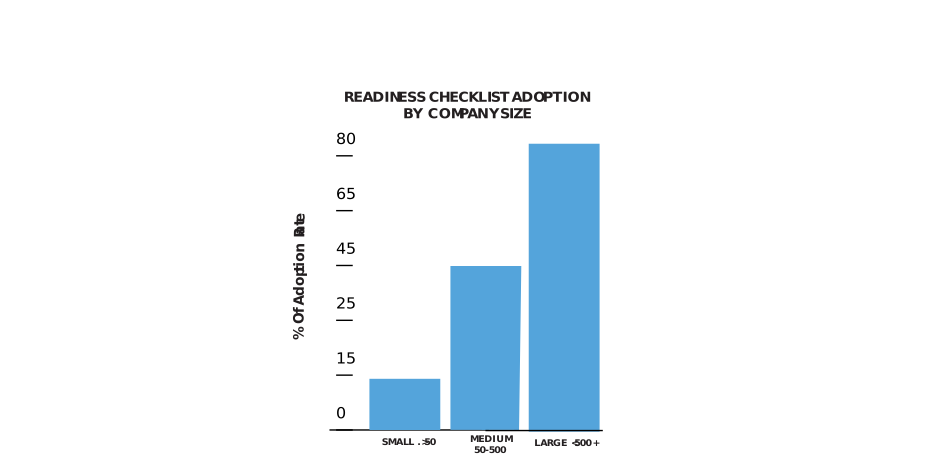
Can your team explain, in writing, how the AI tool generates risk assessments or outputs—without relying on vendor language?
AI systems cannot be treated as black boxes. Internal teams need to be able to explain how the model works, what logic governs its decisions, and how outputs were validated in context. If regulatory teams can’t articulate this clearly, the submission may not survive scrutiny.

Does your audit trail include change history, retraining documentation, and governance logs for all AI components?
Too many validations are frozen in time. Regulators now expect sponsors to show continuous oversight: how models are updated, when, and why—along with proof that changes were reviewed by qualified personnel.

Have you validated performance and bias across diverse data sources—not just your clinical trial database?
Real-world generalizability is a key demand. If your AI system performs well in sponsor-owned datasets but collapses in external conditions, regulators will ask why that testing wasn’t done up front.
Action point

Action point

Action point

Use these questions to launch a compliance readiness review. Align with data science, QA, and pharmacovigilance teams to build a complete audit package.

FAQs

Frequently Asked Questions

FAQs

Frequently Asked Questions

FAQs

Frequently Asked Questions

How is this different from enterprise platforms like AlphaSense or Cortellis?

Enterprise platforms provide self-service database access—you search and analyze yourself. We provide analyst-driven strategic intelligence—human experts who deliver insights and recommendations specific to your needs. Think of us as your fractional CI team, not a software subscription.

What’s shifting in the landscape — and why should I care now?

Because timing matters. We track not just competitor actions, but the strategic meaning behind them.

How do you gather competitive intelligence?

We analyze publicly available sources including ClinicalTrials.gov, regulatory databases, scientific publications, company press releases, investor presentations, and conference proceedings. All work is conducted ethically and legally. We never use corporate espionage or questionable methods.

Can I use these reports in investor materials?

Yes. The reports are yours to use as you see fit—in pitch decks, board presentations, or strategic planning documents. We can also format deliverables to match your investor deck style upon request.

What if my competitors are private companies with limited information?

We specialize in piecing together intelligence from fragmentary sources. Even private biotechs leave digital footprints through trial registries, publications, patents, job postings, and conference presentations. This is where analyst expertise matters—connecting the dots that platforms miss.

How long does it take to get a competitive intelligence report?

One-time reports: 2 weeks from kickoff to final delivery, including a 60-minute strategy debrief call. Free competitive briefs: 3-5 business days. Monthly subscriptions: Initial setup takes 1-2 weeks, then you receive ongoing briefings on your chosen schedule (weekly, bi-weekly, or monthly). We prioritize speed without sacrificing quality—perfect for biotech teams working against tight timelines.

What if I'm not sure which service I need?

Start with our free 1-page competitive brief. This gives you a taste of our analysis style and helps us understand your specific needs. Based on that initial brief, we can recommend whether a one-time report, monthly subscription, or custom project makes the most sense for your situation. No pressure, no obligation—we'd rather recommend the right fit than oversell.

Do you work with companies outside the UK?

Yes, we have operations in UK & US. We work with biotech companies globally—UK, EU, US, Canada, and beyond. Our intelligence coverage is international (we track FDA, EMA, PMDA, and other regulatory bodies), and we deliver reports remotely via video calls and digital documents. Time zone differences are never an issue—we schedule debriefs at times that work for your team.

How is this different from enterprise platforms like AlphaSense or Cortellis?

Enterprise platforms provide self-service database access—you search and analyze yourself. We provide analyst-driven strategic intelligence—human experts who deliver insights and recommendations specific to your needs. Think of us as your fractional CI team, not a software subscription.

What’s shifting in the landscape — and why should I care now?

Because timing matters. We track not just competitor actions, but the strategic meaning behind them.

How do you gather competitive intelligence?

We analyze publicly available sources including ClinicalTrials.gov, regulatory databases, scientific publications, company press releases, investor presentations, and conference proceedings. All work is conducted ethically and legally. We never use corporate espionage or questionable methods.

Can I use these reports in investor materials?

Yes. The reports are yours to use as you see fit—in pitch decks, board presentations, or strategic planning documents. We can also format deliverables to match your investor deck style upon request.

What if my competitors are private companies with limited information?

We specialize in piecing together intelligence from fragmentary sources. Even private biotechs leave digital footprints through trial registries, publications, patents, job postings, and conference presentations. This is where analyst expertise matters—connecting the dots that platforms miss.

How long does it take to get a competitive intelligence report?

One-time reports: 2 weeks from kickoff to final delivery, including a 60-minute strategy debrief call. Free competitive briefs: 3-5 business days. Monthly subscriptions: Initial setup takes 1-2 weeks, then you receive ongoing briefings on your chosen schedule (weekly, bi-weekly, or monthly). We prioritize speed without sacrificing quality—perfect for biotech teams working against tight timelines.

What if I'm not sure which service I need?

Start with our free 1-page competitive brief. This gives you a taste of our analysis style and helps us understand your specific needs. Based on that initial brief, we can recommend whether a one-time report, monthly subscription, or custom project makes the most sense for your situation. No pressure, no obligation—we'd rather recommend the right fit than oversell.

Do you work with companies outside the UK?

Yes, we have operations in UK & US. We work with biotech companies globally—UK, EU, US, Canada, and beyond. Our intelligence coverage is international (we track FDA, EMA, PMDA, and other regulatory bodies), and we deliver reports remotely via video calls and digital documents. Time zone differences are never an issue—we schedule debriefs at times that work for your team.

How is this different from enterprise platforms like AlphaSense or Cortellis?

Enterprise platforms provide self-service database access—you search and analyze yourself. We provide analyst-driven strategic intelligence—human experts who deliver insights and recommendations specific to your needs. Think of us as your fractional CI team, not a software subscription.

What’s shifting in the landscape — and why should I care now?

Because timing matters. We track not just competitor actions, but the strategic meaning behind them.

How do you gather competitive intelligence?

We analyze publicly available sources including ClinicalTrials.gov, regulatory databases, scientific publications, company press releases, investor presentations, and conference proceedings. All work is conducted ethically and legally. We never use corporate espionage or questionable methods.

Can I use these reports in investor materials?

Yes. The reports are yours to use as you see fit—in pitch decks, board presentations, or strategic planning documents. We can also format deliverables to match your investor deck style upon request.

What if my competitors are private companies with limited information?

We specialize in piecing together intelligence from fragmentary sources. Even private biotechs leave digital footprints through trial registries, publications, patents, job postings, and conference presentations. This is where analyst expertise matters—connecting the dots that platforms miss.

How long does it take to get a competitive intelligence report?

One-time reports: 2 weeks from kickoff to final delivery, including a 60-minute strategy debrief call. Free competitive briefs: 3-5 business days. Monthly subscriptions: Initial setup takes 1-2 weeks, then you receive ongoing briefings on your chosen schedule (weekly, bi-weekly, or monthly). We prioritize speed without sacrificing quality—perfect for biotech teams working against tight timelines.

What if I'm not sure which service I need?

Start with our free 1-page competitive brief. This gives you a taste of our analysis style and helps us understand your specific needs. Based on that initial brief, we can recommend whether a one-time report, monthly subscription, or custom project makes the most sense for your situation. No pressure, no obligation—we'd rather recommend the right fit than oversell.

Do you work with companies outside the UK?

Yes, we have operations in UK & US. We work with biotech companies globally—UK, EU, US, Canada, and beyond. Our intelligence coverage is international (we track FDA, EMA, PMDA, and other regulatory bodies), and we deliver reports remotely via video calls and digital documents. Time zone differences are never an issue—we schedule debriefs at times that work for your team.

Regulatory Advisory

Cta Shape

Get Started

Ready To Gain An Edge On A Volatile Life Science Landscape

AI in Safety Compliance Competitive Intelligence Report

Cta Image
Cta Image
Cta Shape

Get Started

Ready To Gain An Edge On A Volatile Life Science Landscape

AI in Safety Compliance Competitive Intelligence Report

Cta Image
Cta Image

Get Started

Ready To Gain An Edge On A Volatile Life Science Landscape

AI in Safety Compliance Competitive Intelligence Report

Cta Image
Cta Image